Iris Jung · 12 September 2026
Baltic Shipping Insurers Launch Tiered Rate Structures for Vessels Meeting Low-Impact Berthing Benchmarks
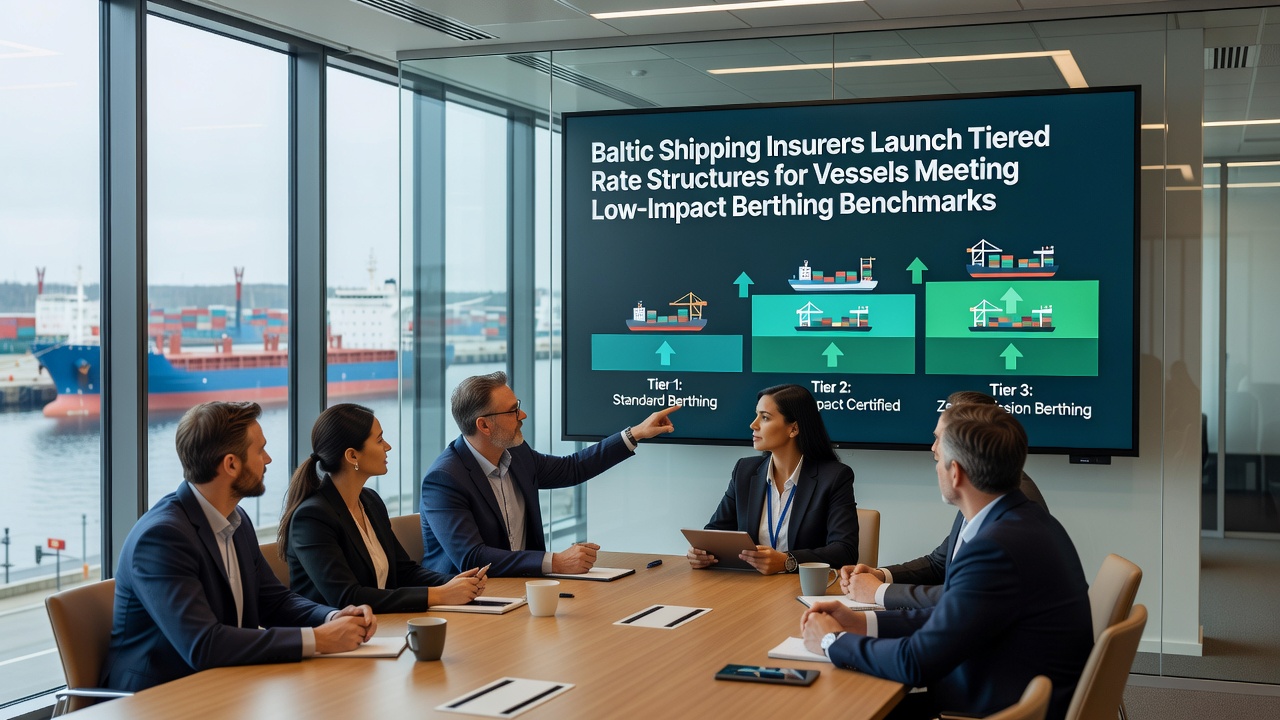
Insurers operating across the Baltic Sea have introduced tiered premium structures that adjust coverage costs for vessels demonstrating compliance with low-impact berthing standards, and these adjustments take effect for policies renewed from September 2026 onward. The frameworks categorize ships into multiple rate bands based on measurable criteria such as approach speed, thruster usage, and contact forces recorded during docking maneuvers. Several major underwriters coordinated the rollout through industry working groups that reviewed data collected from port authority sensors and vessel telemetry systems.Mechanics of the New Rate Tiers
Three primary tiers define the structure: vessels achieving the top benchmark receive base-rate reductions while mid-tier ships maintain standard premiums and lower-tier vessels face surcharges scaled to their recorded impact levels. Insurers calculate each assignment using standardized protocols that integrate real-time sensor readings with historical performance logs, and this methodology allows annual reassessment tied to individual vessel records.
Companies track metrics including peak berthing force, duration of high-thrust maneuvers, and frequency of fender compression events. Data collected over multiple port calls determines whether a vessel qualifies for the lowest band, and operators submit documentation through approved digital platforms that feed directly into actuarial models.
Technical Benchmarks Driving Qualification
Low-impact benchmarks focus on quantifiable reductions in physical stress applied to dock infrastructure and surrounding sediment layers. Standards require approach velocities below established thresholds during final alignment, controlled use of bow and stern thrusters to limit seabed disturbance, and documented use of energy-absorbing fender systems that meet minimum deformation ratings.
Classification societies have published verification procedures that surveyors apply during routine inspections, and these procedures align with existing class notation frameworks for environmental performance. Ports equipped with calibrated monitoring arrays supply anonymized aggregate datasets that underwriters incorporate into risk profiles, creating a feedback loop between operational data and premium calculations.

Industry Adoption Patterns
Fleet operators managing container and bulk carriers have begun adjusting berthing procedures to target the lowest rate band, while ro-ro and tanker segments report parallel preparations through equipment retrofits and crew training programs. Equipment suppliers note increased orders for variable-speed thruster controls and reinforced fender assemblies designed to register lower peak forces during contact.
Actuarial analysis from the European Maritime Safety Agency indicates that vessels consistently operating within benchmark parameters experience fewer incidents of structural contact damage, and this correlation supports the tiered pricing model now embedded in new policy wordings. Separate assessments published by the Maritime Research Institute Netherlands link reduced propeller wash volumes to measurable decreases in localized sediment resuspension around berth pockets.
Integration with Existing Regulatory Frameworks
The tiered structures complement voluntary environmental management systems already recognized by Baltic coastal states and align with guidelines issued by the Helsinki Commission on maritime environmental protection. Underwriters reference these overlapping frameworks when determining whether additional documentation satisfies audit requirements for rate qualification.
Operators report that compliance documentation prepared for one program often satisfies elements required by insurers, which reduces administrative duplication while maintaining separate verification pathways for insurance purposes. Several classification societies now offer optional notations that combine low-impact berthing performance with other environmental criteria, providing a consolidated record that multiple stakeholders can reference.
Conclusion
Baltic shipping insurers have established tiered rate structures that tie premium levels directly to documented low-impact berthing performance, with full implementation scheduled for September 2026. The approach relies on standardized metrics, sensor-derived data, and coordinated verification processes that connect operational records to actuarial outcomes. Industry participants continue to adapt equipment and procedures as the frameworks move from announcement to active policy application across the region.