Casey Hoffmann · 26 September 2026
Northern European Shipping Lines Test Pilot Sensor Networks for Real-Time Emission Tracking at Berths
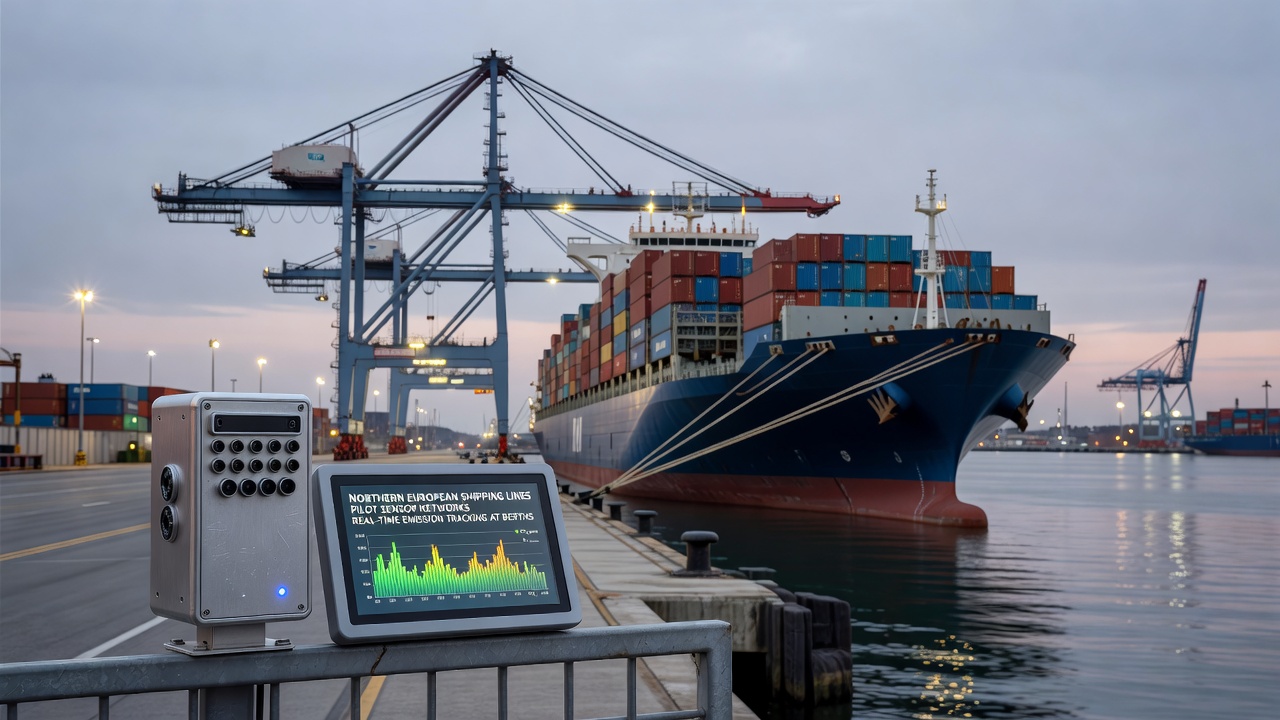
Northern European shipping lines have launched pilot programs that deploy sensor networks at key berths to capture real-time data on vessel emissions while ships remain docked, and these initiatives focus on pollutants such as nitrogen oxides, sulfur oxides, and particulate matter that accumulate during port stays. Ports in Norway, Sweden, and Germany serve as primary test sites where equipment installed on both vessel decks and dockside infrastructure transmits readings every few minutes to centralized platforms operated by port authorities and line operators.
Sensor Technology and Data Collection Methods
Each pilot setup combines electrochemical sensors for gas detection with optical particle counters that operate continuously, and data streams flow through encrypted wireless connections to cloud-based dashboards that flag exceedances against International Maritime Organization thresholds. Technicians calibrate units weekly to maintain accuracy within two percent margins, while automated alerts notify vessel engineers when auxiliary engine output spikes during cargo operations. Researchers at the Norwegian University of Science and Technology have documented how these networks distinguish between emissions from berthed vessels and background port activity, which allows operators to isolate specific sources and adjust berthing schedules accordingly.
One study revealed that continuous monitoring captured 30 percent more emission events than traditional periodic sampling methods, because short bursts from engine restarts became visible in the granular datasets. Ports integrate this information with automatic identification system data to correlate individual ship movements with measured outputs, and the resulting maps show concentration hotspots near certain terminal sections that handle refrigerated containers requiring extended power draws.
Participating Lines and Port Implementations
Lines such as Wallenius Wilhelmsen and DFDS have equipped multiple vessels with complementary onboard units that feed into the berth networks, and these partnerships allow cross-verification between ship-based and shore-based readings. At the Port of Gothenburg, twelve berths now host sensor arrays connected to a central control room that displays live metrics for arriving vessels, whereas Hamburg terminals added similar infrastructure at three container facilities earlier this year. Data indicates that vessels participating in the pilots reduced average berth emissions by 12 percent through adjusted engine load protocols derived from the sensor feedback.
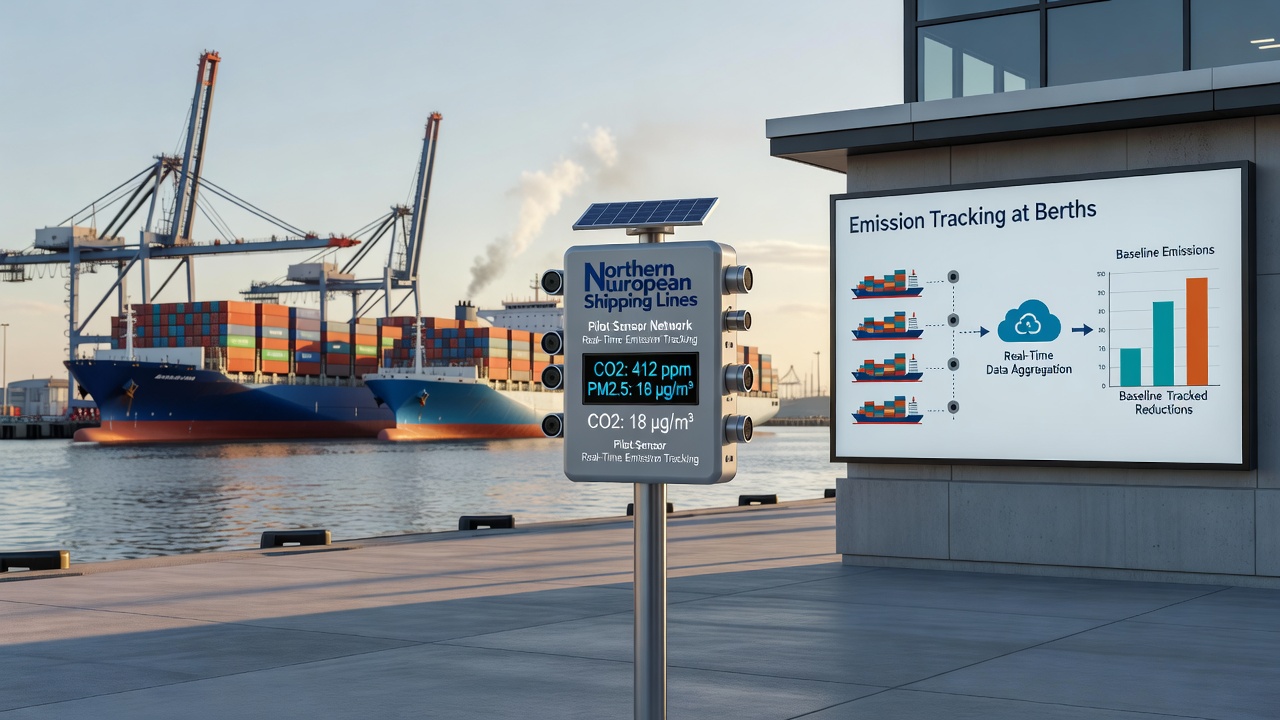
Observers note that the networks also support compliance reporting required under European Union directives on port air quality, and figures from the European Maritime Safety Agency show that ports using such systems submitted more complete datasets during the most recent reporting cycle. Yet integration challenges remain, because older vessels require retrofits that add weight and maintenance intervals, and some operators report temporary gaps in coverage when sensor units undergo recalibration.
Regulatory Context and Future Milestones
Current European regulations set sulfur limits at 0.1 percent for fuel used at berth, and the sensor networks provide independent verification that supports enforcement actions by national maritime authorities. According to reports from the Helsinki Commission, Baltic Sea ports have seen measurable declines in local nitrogen oxide levels since monitoring programs began, although full attribution to the pilot networks requires additional seasons of data collection. Plans call for expanded coverage at additional terminals by September 2026, when updated EU reporting standards are scheduled to take effect and will mandate more frequent emission disclosures from all major ports.
Industry groups such as the Baltic and International Maritime Council have published guidelines that encourage adoption of these technologies, and their materials highlight case studies from vessels that used sensor alerts to shift from diesel generators to shore power connections earlier in the berthing process. The reality is that widespread rollout depends on cost-sharing agreements between lines and port operators, because sensor maintenance and data management add ongoing expenses that smaller operators find difficult to absorb without subsidies.
Conclusion
Pilot sensor networks at Northern European berths continue to generate detailed emission profiles that inform both operational adjustments and regulatory compliance efforts, and the data collected through 2025 has already shaped revised berthing procedures at several terminals. As coverage expands toward the September 2026 milestones, port authorities and shipping lines will gain clearer benchmarks for evaluating progress against established air quality targets, while the technical lessons from these installations inform similar projects planned for other coastal regions.